

Messiah 101: Understanding Jesus as the Promised Messiah
- Rebecca Montrone

- Dec 14, 2025
- 8 min read
The word Messiah is familiar — but often with assumed meaning rather than real understanding. Think about it. We’re used to hearing or even saying things like, “Jesus is the Messiah,” or “The Jews of Jesus’ time didn’t understand that Jesus was the Messiah.” But what does that actually mean?
And what about Handel’s Messiah? We know it’s all about Jesus, but… why? What is being claimed when that word is used?
Today is going to feel more like a class than a devotional — but I’ve found that some of my most thrilling, intimate moments with God have come while in the midst of precisely this kind of study. Did you know that approximately 300 Old Testament Scriptures are understood by Christian scholars to have been fulfilled in the person and work of Jesus Christ, with additional Messianic prophecies still awaiting future fulfillment at His return? Whew! I am IMPRESSED.
I’m hoping today’s rather DEEP DIG gives us all reason to be even more impressed — and more deeply enthralled — with our LORD whenever we next hear that mysterious word...

What is Messiah?
The Question We’re Actually Asking
Before we ask whether Jesus is the Messiah, we must first understand what Scripture means by “Messiah.” Without that foundation, every later conclusion rests on assumption rather than understanding(cf. Luke 24:25–27).
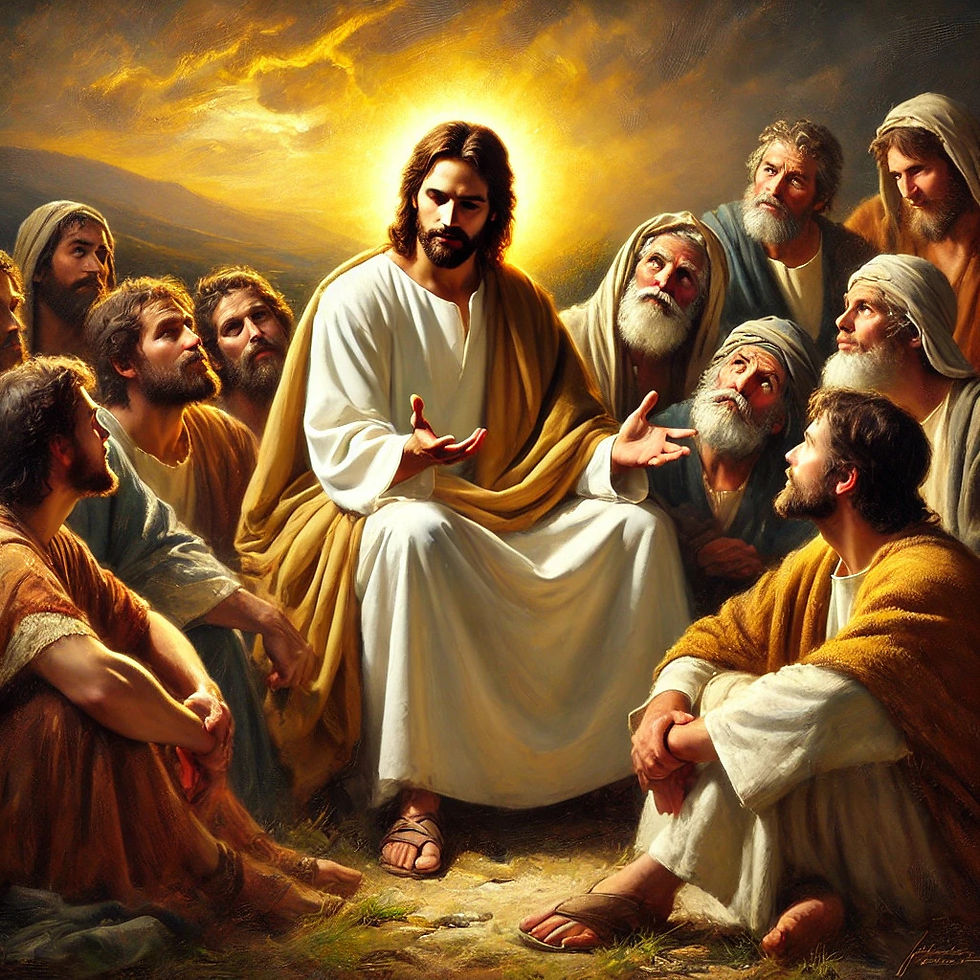
And He said to them,
'O foolish men and slow of heart to believe in
all that the prophets have spoken!
Was it not necessary for the Christ to suffer these things
and to enter into His glory?'
Then beginning with Moses and with all the prophets,
He explained to them the things
concerning Himself in all the Scriptures."
The Meaning of the Word
The English word Messiah comes directly from the Hebrew:

מָשִׁיחַ (Mashiach) — “the anointed one”
(1 Samuel 24:6; Psalm 2:2)
The Greek equivalent used in the New Testament is Χριστός (Christos)
(John 1:41; Acts 2:36).
“We have found the Messiah” (which means Christ). — John 1:41
This is a title, not a name.
What Anointing Meant in Israel
In Scripture, anointing is not symbolic sentiment — it is divine appointment.
Oil was poured as a visible sign that:
God had chosen the individual
God had authorized the individual
God had set them apart for a specific role

Examples:
Exodus 29:7 (priests)
1 Samuel 10:1 (Saul)
1 Samuel 16:12–13 (David)
“Then Samuel took the horn of oil and anointed him… and the Spirit of the LORD rushed upon David from that day forward.”
— 1 Samuel 16:13

Who Was Anointed in the Old Testament?
Scripture identifies three offices that were anointed:
1) Priests
Exodus 28:41
Exodus 40:13–15
Their role: represent the people before God
2) Prophets
1 Kings 19:16 (Elisha)
Their role: speak God’s word to the people
3) Kings
1 Samuel 9:16
1 Samuel 16:1
Their role: rule the people on God’s behalf

All three offices are important — but kingship becomes central to Messianic expectation(Psalm 89:3–4; Isaiah 9:6–7).
“I have made a covenant with My chosen;
I have sworn to David My servant,
I will establish your seed forever
And build up your throne to all generations.”
Psalm 89:3–4
“A Messiah” vs. “The Messiah”
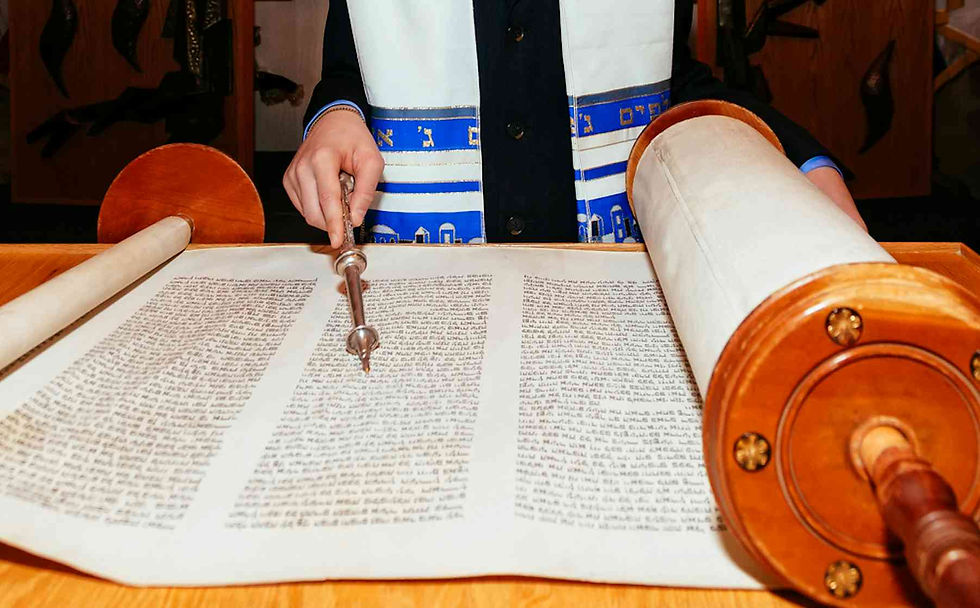
Early in Scripture, mashiach refers to many individuals.
Examples:
Saul — 1 Samuel 24:6
David — 2 Samuel 19:21
At this stage:
there are many anointed ones
all are flawed
all are temporary
This creates a growing tension:
If God’s purposes are eternal, why are His anointed rulers not?
(Psalm 89:38–45)
The Turning Point: God’s Covenant with David

Everything changes in 2 Samuel 7, when...
God promises David:
a house (dynasty) — v. 11
a throne — v. 13
a kingdom — v. 13
that will endure forever — v. 16
“Your house and your kingdom
shall be made sure forever
before Me.”
— 2 Samuel 7:16

This creates a theological problem:
No human king can fulfill an eternal throne:
“Do not trust in princes,
In mortal man, in whom there is no salvation.
His spirit departs, he returns to the earth;
In that very day his thoughts perish.”
(Psalm 146:3–4)
From this point forward, Israel’s hope shifts from the next king to a future, ideal king.
Messiah in the Prophets - Isaiah, Micah, Jeremiah, Zechariah, Daniel...

As the prophets speak, the Messiah is increasingly described as:
A descendant of David
Isaiah 11:1
Jeremiah 23:5
A righteous ruler
Psalm 72:1–4
Isaiah 9:7
A restorer of justice and covenant faithfulness
Isaiah 42:1–4
Jeremiah 33:14–16
A king whose reign does not end
Isaiah 9:6–7
Daniel 7:13–14
At this point, the Messiah’s role begins to exceed normal human categories.
What a Messiah Is (Biblically Defined)

Putting these threads together, Scripture presents the Messiah as:
An anointed King from David’s line
(2 Samuel 7:12–13; Isaiah 11:1)
Appointed directly by God
(Psalm 2:6; Isaiah 42:1)
Entrusted with God’s authority
(Psalm 110:1–2)
Establishing an enduring kingdom
(Daniel 7:14; Micah 4:1–7)

“And to Him was given dominion,
Glory and a kingdom,
That all the peoples, nations, and men of every language
Might serve Him.
His dominion is an everlasting dominion
Which will not pass away;
And His kingdom is one
Which will not be destroyed.” (Dan 7:14)
Why This Foundation Matters

If Messiah is reduced to:
a vague spiritual title
a synonym for “Savior”
or a piece of Christian vocabulary
we lose:
the logic of Israel’s hope
(Romans 9:4–5)
the reason Jesus was controversial (John 7:40–43)
the meaning of both belief and rejection (1 Corinthians 1:23)
Messiah is not decorative language.
It is the framework Jesus enters — and redefines (Luke 24:44).
The Development of the Messianic Promise: A Scriptural Timeline

Pour yourself another cup of tea or top off your coffee, and stick with me! You will be fascinated as you see the thread of the tapestry, which begins in the third chapter of Genesis, and then continues through now and into the future! 🤩
1. The Promise Introduced — Genesis
Genesis 3:15 — The Protoevangelium (“First Gospel”)
“He shall bruise you on the head,
And you shall bruise him on the heel.”

What is revealed:
A future individual
Born of a woman
Who will defeat the serpent
At personal cost
What is not yet revealed:
Name
lineage
nation
kingship
👉 The Messiah is introduced as a Deliverer, not yet a King.
2. The Promise Narrowed to a Family — Abraham
Genesis 12:3; 22:18
“In you all the families of the earth will be blessed.”

What is revealed:
The Deliverer will come through Abraham’s line
His work will bless all nations, not Israel alone
👉 Messiah is now tied to a chosen family, not all humanity generally.

3. The Promise further narrowed to a Tribe — Judah
Genesis 49:10
“The scepter shall not depart from Judah…”
What is revealed:
The Messiah will come from the tribe of Judah
He will possess royal authority (“scepter”)
His rule will involve obedience of the peoples
👉 Kingship enters the picture for the first time.

4. The Promise Expressed Through Kingship — David
2 Samuel 7:12–16
“Your house and your kingdom shall endure before Me forever.”
What is revealed:
Messiah will be a son of David (of the tribe of Judah)
He will rule on an eternal throne
His kingdom will not end
Critical shift:
No ordinary human king can fulfill this
Expectation moves from many kings → one ideal King
👉 This is the turning point in Messianic expectation.
5. The Promise Clarified by the Psalms — Both Royal & Suffering Themes

Royal Psalms
Psalm 2 — God’s anointed King over the nations
Psalm 110 — A King seated at God’s right hand
Psalm 72 — A righteous, global reign
Suffering Psalms
Psalm 22 — Mockery, piercing, suffering
Psalm 69 — Rejection and zeal
Two streams develop side by side:
A reigning King
A suffering figure
👉 These are not yet reconciled.

6. The Promise Expanded by the Prophets — Isaiah, Jeremiah, Micah, etc.
Isaiah
Isaiah 7:14 — Virgin birth
Isaiah 9:6–7 — Divine titles, eternal reign
Isaiah 11:1–5 — Spirit-filled Davidic ruler
Isaiah 42; 49; 53 — The Servant who suffers
Micah 5:2
Birthplace: Bethlehem
Ruler “from days of eternity”
Jeremiah 23:5–6
A righteous Branch from David
Called “The LORD Our Righteousness”
👉 Messiah is now:
Davidic
righteous
Spirit-anointed
both human and more than human
7. The Promise Placed on a Timeline — Daniel

Daniel’s “70 weeks” prophecy (Daniel 9:24–27) outlines a divinely appointed timeline in which God would deal decisively with Israel’s sin, bring about atonement, and introduce the Messiah. It culminates in the Messiah being “cut off,” followed by the destruction of Jerusalem, while also pointing ahead to events still awaiting final fulfillment.
Daniel 7:13–14
“One like a Son of Man… given dominion forever.”
Daniel 9:25–26
“Messiah will be cut off…”
What is revealed:
Messiah receives eternal dominion
Messiah will suffer and be cut off
His coming is linked to an historical timeframe
👉 Messiah’s mission includes suffering before glory.
8. The Promise Awaited — What????

Between Malachi and Matthew, God stopped talking with humans in the form of delivering scripture through prophets, etc., which is the only way we have of knowing the things He has said. During this time, He busily engineers world events to set the stage for the perfect timing - including politically and linguistically - for the arrival of Jesus Christ, the Messiah on planet earth! Malachi, in the last written book of the Old Testament, foretells John the Baptist as the next prophet to arrive on the scene, and that will be some 400 years later! (Malachi 4:5-6).
During these "silent" 400 years:
Israel waits
expectation intensifies
Roman occupation sharpens political hope
God was "silent" but not "idle" - using this formative time geopolitically to usher in the perfect language for the writing of the New Testament - Greek - and setting the stage ideally in many other key ways before sending His Son
But many expected:
a conquering King
national liberation
immediate restoration
And few expected:
a suffering Messiah
rejection
delay between suffering and reigning
9. The Promise Fulfilled — JESUS CHRIST!
Key New Testament Affirmations:
Matthew 1:1 — “Jesus Christ, son of David”
Luke 24:25–27, 44–45 — Fulfillment of all Scripture
Acts 2:30–36 — Davidic throne fulfilled in Christ
Romans 1:3–4 — Descended from David, declared Son of God
👉 Jesus - the Son of Man - does not invent Messiahship👉 He steps fully into it
10. The Promise Not Yet Completed - Jesus Christ is Coming to Earth Again!

“Christ” - of course - is not Jesus’ last name.
It is the Greek word (Christos) meaning “the Anointed One,” which is the direct translation of the Hebrew “Messiah” (Mashiach).
So when Scripture calls Jesus “the Christ,” it is declaring that He is the Messiah Israel had been promised (John 1:41).
Messiah (Hebrew) = Christ (Greek) = “the Anointed One.”

Scripture maintains both a first AND a second coming of the Messiah!
First coming: suffering, atonement, rejection - He has DONE THAT!
(Isaiah 53; Daniel 9:26; Luke 22–23)
Second coming: visible reign, restoration - We AWAIT THAT!
(Isaiah 11; Zechariah 14; Revelation 19)
👉 One Messiah.
👉 Two phases.
👉 One unified plan.
In Summary
The Messiah is progressively revealed in Scripture — from a promised Deliverer, to a chosen lineage, to a Davidic King, to a suffering Servant, to an eternal ruler — fulfilled in Jesus Christ and awaiting final consummation.

Phew! We made it through a lot of history AND theology in a relatively short amount of time! Doesn't it absolutely knock your socks off that God is this intricately wise, precise, and has all the power needed to bring everything to completion and right on time? That right there boosts my faith exponentially! If He can make all of those critcially important things work out absolutely perfectly AND in the process secure my eternal salvation,* surely I can trust Him to take care of whatever concerns me today!
"Even so, Come, LORD Jesus!"
*Interested in knowing how to enter into a personal relationship with God through faith in the death and resurrection of Jesus Christ? Say a Salvation Prayer and Receive Jesus Christ Today.
Of course, the saying of a prayer is the reflection of a monumental and life-changing heart decision, but this is a good guide.




Comments