

In Him We Live, and Move, and Have Our Being


For a long time - I'm talking years - I have wanted to write about the pervasive theme of "dwelling" in scripture. First, I love the word itself. Thinking of a "dwelling place," for example, evokes pleasant thoughts of comfort, shelter, and cheer.
Home.

Where we live, or "dwell."
According to dictionary "authority" - "to dwell" means -
dwell (verb)
To live or reside in a place; to have one’s home; to abide.
To remain or stay in a particular place or condition.
To linger or continue upon something, especially in thought or attention—as in “to dwell upon a subject.”
From Middle English dwellen, originally carrying the sense of remaining, staying, or abiding.
Don't you just love that? Remaining. Staying. Abiding. As I type this from my recliner in my lovely "dwelling place" on a Sunday afternoon, that's exactly where my head and heart are and where they plan to stay. And I'm talking about so much more than my physical body. I am with God, in His presence, very comfortably ensconced in my surroundings:
Remaining
Staying, and...
Abiding
Did you know?

The language of dwelling, abiding, inhabiting, and making one’s home occurs well over 1,000 times throughout Scripture!
And...the concept of dwelling follows a thread that can be traced from the very first chapter of Genesis to the very last chapter of Revelation. In Genesis, as God is creating the earth and its inhabitants, He is creating a place for creatures and man to dwell.
My "Must-Have" Features of a Wondrous Dwelling Place

What are the criteria for a dwelling place you actually want to dwell in? These are some of mine:
1. Safety & Shelter — protection from danger, intrusion, weather, exposure, fear.
2. Peace & Harmony — tranquility within the dwelling and loving relationships among its inhabitants.
3. Provision & Sustenance — food, water, warmth, clothing, and everything necessary for life.
4. Rest & Restoration — sleep, comfort, privacy, retreat, renewal.

5. Beauty & Delight — surroundings that please the senses; light, fragrance, music, nature, art, play, celebration.

6. Belonging & Fellowship — love, family, companionship, hospitality, acceptance: this is where I belong.

7. Security & Permanence — stability, rootedness, freedom from displacement, the ability to build and flourish with confidence in the future.

8. Fruitfulness & Flourishing — a place where life can grow, multiply, create, produce, and thrive; where meaningful work bears fruit and the inhabitants enjoy the results of their labor.
Why is it, do you suppose, that we creatures have such strong cravings for places to set up housekeeping?

“Yea, the sparrow hath found an house, and the swallow a nest for herself, where she may lay her young, even thine altars, O LORD of hosts, my King, and my God.” Ps. 84:3
Maybe the best place to start is to see what God, the CREATOR of us and of all living things, seems to reveal about His preferred dwelling:
Holiness / purity. God repeatedly insists that the place where He dwells be holy because He is holy. “And let them make Me a sanctuary, that I may dwell among them.” (Exodus 25:8). See also Leviticus 19:2; Psalm 93:5; 1 Corinthians 3:16–17.

Beauty / glory. God does not prescribe stark utility for His sanctuary. There is gold, fine linen, blue, purple, scarlet, precious stones, carved flowers, palm trees, pomegranates, cherubim, beautiful woods, fragrance, lamps and magnificent craftsmanship. Exodus 25–30 and 1 Kings 6–7 are treasure troves. Exodus 28:2 even gives the explicit phrase, “for glory and for beauty.”
Order / precision. Measurements matter. Placement matters. Materials matter. Functions matter. God repeatedly tells Moses to construct everything “according to the pattern” shown him (Exodus 25:9, 40; Hebrews 8:5). God's dwelling is not chaotic.
Light. The lampstand burns in the sanctuary (Exodus 25:31–40), while the culmination is breathtaking: the New Jerusalem ultimately has no need of sun or moon because “the glory of God did lighten it, and the Lamb is the light thereof.” (Revelation 21:23).

Fragrance. God actually specifies the composition of sacred incense (Exodus 30:34–38).
Life / fruitfulness / garden imagery. Cherubim, palms, flowers, lilies, pomegranates—God fills His architectural instructions with representations of living things.

The Temple almost evokes Eden. And at the very end of Scripture we encounter the river of life and tree of life again (Revelation 22:1–2).
Music / praise / joy. David makes extensive provision for singers and musicians in connection with God's house (1 Chronicles 25), and the dedication of Solomon's Temple erupts in unified praise (2 Chronicles 5:11–14).

Peace. There is an intriguing reason David is not permitted to build the Temple. He has been a man of war; Solomon will be a “man of rest,” and God will give Israel “peace and quietness” during his reign (1 Chronicles 22:8–10). God's permanent house is constructed in an atmosphere of peace.
Fellowship / communion. Sacrifice, feasting, prayer, worship and meeting with God are woven throughout Tabernacle and Temple life. God's dwelling is relational. He says, “there I will meet with thee” (Exodus 25:22).
Righteousness / integrity among the inhabitants. God is emphatic that an impressive religious house is meaningless when the people living before Him practice injustice and evil. Jeremiah 7 is particularly strong here. Psalm 15 asks, “LORD, who shall abide in thy tabernacle? who shall dwell in thy holy hill?” and then describes the character of that person.
Humility / contrition. This one is magnificent for your subject because God actually tells us whom He chooses to live with: “I dwell in the high and holy place, with him also that is of a contrite and humble spirit.” (Isaiah 57:15).
Love and obedience. Jesus carries this directly into the believer as God's dwelling: “If a man love me, he will keep my words… and we will come unto him, and make our abode with him.” (John 14:23).
Unity among His people. “Behold, how good and how pleasant it is for brethren to dwell together in unity!” (Psalm 133:1). Then Ephesians 2:21–22 describes believers together growing into “an holy temple in the Lord… an habitation of God through the Spirit.”
Permanence. This is not ultimately a temporary visit. Jesus says the Comforter will “abide with you for ever” (John 14:16). Revelation brings the theme to completion: “Behold, the tabernacle of God is with men, and he will dwell with them.” (Revelation 21:3).
In Him We Live!

And now, having thought about what we desire in our dwelling places—and having taken a glimpse at what God Himself desired and prescribed for places set apart for His habitation—the whole idea of dwelling suddenly gets kicked up into entirely new territory. This is where it really gets good!
Throughout Scripture, God gradually reveals something almost too wonderful to comprehend:
His ultimate intention is not merely to provide us with a dwelling place, nor simply to have us prepare a dwelling place for Him. His intention is that we should dwell in Him—and He in us.
Moses expressed the first side of this extraordinary reality thousands of years ago:
“Lord, thou hast been our dwelling place in all generations.”— Psalm 90:1
God doesn't merely give us shelter. He Himself is the shelter. He doesn't merely lead us home. He Himself is Home.
And yet Scripture takes us in the other direction at the same time. God repeatedly expresses His desire to dwell with us:
“And I will dwell among the children of Israel, and will be their God.”— Exodus 29:45
That theme travels all the way through Scripture until we hear it proclaimed triumphantly near its very end:
“Behold, the tabernacle of God is with men, and He will dwell with them, and they shall be His people…”— Revelation 21:3
But between those two declarations something even more intimate happens.
God does not merely dwell among His people. Through Christ and the indwelling Holy Spirit, God comes to dwell within His people:
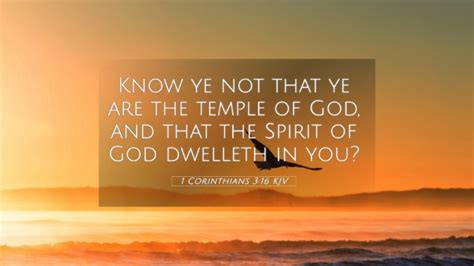
The dwelling place has moved, as it were, from a garden, to a tabernacle, to a magnificent temple—and ultimately into the believer himself.
And then Jesus takes the idea deeper still. On the night before His crucifixion, He prays:
“I in them, and thou in me, that they may be made perfect in one…”— John 17:23
If you can try to imagine this startling truth, that for those who have received the free gift of eternal life by accepting Jesus' death as payment for our sins and His resurrection defeating the grave*:
God is actually dwelling in us, and we are actually dwelling in Him...

“If a man love me, he will keep my words: and my Father will love him, and we will come unto him, and make our abode with him.”— John 14:23
All leading to the Great, Grand Crescendo!

Finally, the biblical story ends with all separation removed: God and His redeemed people* dwelling together forever! From Rev 21:3-4:
“And I heard a great voice out of heaven saying, Behold, the tabernacle of God is with men, and He will dwell with them, and they shall be His people, and God Himself shall be with them, and be their God.
And God shall wipe away all tears from their eyes; and there shall be no more death, neither sorrow, nor crying, neither shall there be any more pain: for the former things are passed away.”
“And there shall be no more curse: but the throne of God and of the Lamb shall be in it; and his servants shall serve him: And they shall see his face; and his name shall be in their foreheads.” Revelation 22:3–4

I truly hope that, as I do, you FEEL being at home in your relationship with God, the believer's Father, and our Lord Jesus Christ! It says in Romans chapter 8 that:
"The Spirit bears witness with our Spirit that we are the children of God!" (v. 16)
Children live at home with their fathers, right? They live in peace, safety, and security at all times. And, while it is true we can - as children sometimes do - become restless and want to wander from home, our Father's loving discipline will bring us back home, close the door behind us, and help us get settled back right where we belong.
“For in him we live, and move, and have our being; as certain also of your own poets have said, For we are also his offspring.”
— Acts 17:28
Psalm 90 is a marvelous Psalm of contrasts—both severe and deeply comforting. Moses looks unflinchingly at the brevity and frailty of human life, the reality of sin, the righteous anger of God, and the certainty that our days quickly pass away. And yet he begins by anchoring everything in one magnificent truth: “Lord, thou hast been our dwelling place in all generations.” Before the mountains, before the earth, before our brief little lives began, God was—and He remains our eternal Home. Against the sobering reality of human mortality stands the everlasting security of God Himself. What a Psalm with which to end our thoughts together.
*Interested in knowing how to enter into a personal relationship with God through faith in the death and resurrection of Jesus Christ? Say a Salvation Prayer and Receive Jesus Christ Today.
Of course, the saying of a prayer is the reflection of a monumental and life-changing heart decision, but this is a good guide.



Comments