

Immanuel - God With Us: Are We With Him?


Today I'd like to start with a reading of this amazing portion of scripture so we have it clearly in our minds before examining it more deeply. Well! What portion of scripture isn't amazing, given that all scripture is the very Word of God, coming directly from His mouth? However, in these short 14 verses - when you think about it - we really have the entire story of God in a nutshell. This is a stirring read - so much truth here - so please take your time and savor, allowing the Holy Spirit to speak with yours...
-----------------
“In the beginning was the Word, and the Word was with God, and the Word was God. He was in the beginning with God. All things came into being through Him, and apart from Him nothing came into being that has come into being. In Him was life, and the life was the Light of men.
The Light shines in the darkness, and the darkness did not comprehend it.
There came a man sent from God, whose name was John. He came as a witness, to testify about the Light, so that all might believe through him. He was not the Light, but he came to testify about the Light.
There was the true Light which, coming into the world, enlightens every man. He was in the world, and the world was made through Him, and the world did not know Him. He came to His own, and those who were His own did not receive Him. But as many as received Him, to them He gave the right to become children of God, even to those who believe in His name, who were born, not of blood nor of the will of the flesh nor of the will of man, but of God.
And the Word became flesh, and dwelt among us, and we saw His glory, glory as of the only begotten from the Father, full of grace and truth.”
John 1:1-14
----------------

There are two key objects that stand out here:
· Word
· Light
Both are descriptive of the entirety of God and, here, as manifest to the world in the person of Jesus Christ.

Words are not merely sounds or symbols; they are carriers of meaning. Through words, what is unseen becomes known, what is hidden is revealed, and what is internal is made manifest. Words convey thought, intention, and purpose — they bring understanding where there was silence and clarity where there was mystery. To speak is to disclose; to give a word is to make oneself known.

Light is that by which reality is made visible. It does not create what exists, but reveals what is already there. Light exposes, clarifies, and distinguishes — showing things as they truly are. In its presence, darkness gives way, confusion recedes, and truth becomes discernible. Without light, even what is real remains unseen.
In Jesus Christ, the Word and the Light took on human form. As the Word, He perfectly expressed the mind and heart of God; as the Light, He revealed reality as it truly is — God, humanity, sin, and redemption. In Him, God did not merely speak from heaven or shine from afar; He entered our world so He could be heard, seen, and known.
BUT! THE GREATEST IRONY OF ALL TIME & ETERNITY:

That Jesus Christ was not noticed by the great majority as being God in the flesh, the Messiah, or even a prophet-rank messenger of God is hard to believe, but it fits an age-old pattern.
Repeatedly throughout the Old Testament we see God’s people rejecting the prophets God sends to them. Persecuting them, killing them.
Jesus told of a landowner who planted a vineyard and entrusted it to tenants. When the time came for fruit, he sent servants to them, but the tenants beat and killed those sent. Again and again, messengers were rejected. Finally, the landowner sent his beloved son, expecting him to be respected — but the tenants killed him as well. Through this parable, Jesus summarized Israel’s long history of rejecting God’s prophets and revealed that He Himself was the Son who had now been sent. (Mt 21:33-46; Mark 12:1-12; Luke 20:9-19)
Later, Jesus would lament:

These words do not reveal a distant or indifferent God, but a brokenhearted One.
Jesus’ lament over Jerusalem exposes the grief of a God who longs to gather, protect, and save — yet is repeatedly refused. The sorrow in His voice is the sorrow of rejected love.
BUT! (one of the many great "BUTS" of GOD!)

"...who were born, not of blood, nor of the will of the flesh, nor of the will of man, but of God." v. 13
What does this mean?
Not of blood This birth does not come through lineage, heritage, or religious ancestry; it cannot be inherited.
Nor of the will of the flesh It is not produced by human desire, effort, or natural impulse.
Nor of the will of man It is not granted by human authority, decision, or control.
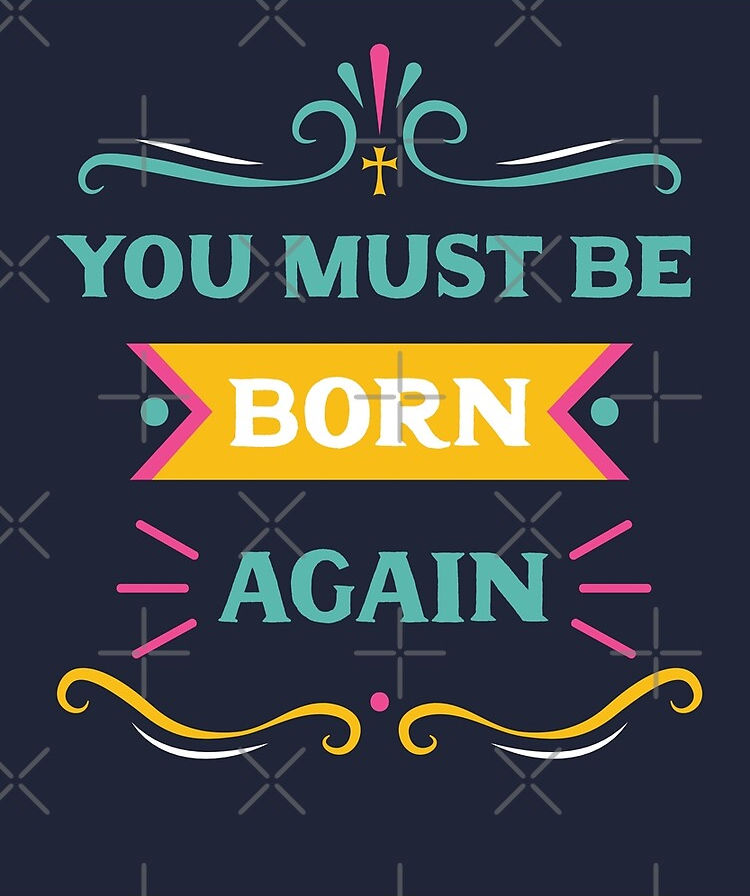
Jesus later made this truth unmistakably clear when He spoke with Nicodemus. Though Nicodemus had lineage, learning, and religious authority, Jesus told him plainly, “You must be born again” (John 3:3). New birth is not achieved by who we are or what we have done; it is a work of God that must come from above.
Receiving Christ — Romans Speaks Plainly
"But as many as received Him, to them He gave the right to become the children of God..."
Romans 3:23–24
“For all have sinned and fall short of the glory of God,
and are justified freely by his grace
through the redemption that is in Christ Jesus.”
Salvation begins with honesty — every person stands in need, and salvation is given freely by grace, not earned.
Romans 5:8
“But God shows his love for us
in that while we were still sinners,
Christ died for us.”
God’s initiative precedes our response; Christ came not for the worthy, but for the lost.
Romans 6:23
“For the wages of sin is death,
but the free gift of God is eternal life
in Christ Jesus our Lord.”
Two outcomes are set before us — what sin earns, and what God gives as a gift in Christ.
Romans 10:9–10
“If you confess with your mouth that Jesus is Lord
and believe in your heart that
God raised him from the dead,
you will be saved.”
Salvation is received through faith — an inward trust expressed outwardly in allegiance to Jesus as Lord.
Romans 10:13
“For everyone who calls on the name of the Lord will be saved.”
The invitation is universal; no one is excluded from calling upon Him.
Salvation is not inherited, achieved, or controlled — it is received by grace through faith in Jesus Christ, the Lord who came near - God with us.

John does not end his prologue with an argument, but with an invitation. The Word has spoken. The Light has come. Grace and truth have taken on flesh and stepped into our world. Nothing more needs to be proven. What remains is not God’s action, but ours. To receive Jesus Christ is not merely to admire Him, analyze Him, or speak well of Him, but to trust Him — to welcome the One who has already come near. God is with us. The question that quietly lingers is whether we will be with Him.
*Interested in knowing how to enter into a personal relationship with God through faith in the death and resurrection of Jesus Christ? Say a Salvation Prayer and Receive Jesus Christ Today.
Of course, the saying of a prayer is the reflection of a monumental and life-changing heart decision, but this is a good guide.


Comments