

"Forgive us our sins, as we forgive..." Praying the Lord's Prayer - Part 4

Updated: Apr 13

I've been walking us through The Lord's Prayer, and "Give us this day our daily bread" comes just before this, but I did a post on this a couple of months ago: Daily Bread 'n Beyond. So, if you haven't seen that or want to review, just go back! It is absolutely always time to savor the wonder of God's rhythmic, always-on-time provision for all things for us, His "lucky" children!
We now come to a line in The Lord’s Prayer that can be both deeply comforting and deeply disconcerting at the same time:

“and forgive us our debts, as we also have forgiven our debtors.” Matthew 6:12
It is comforting because it assures God's forgiveness is available to us. It can bring on some self-squirm/discomfort, however, as it assumes forgiveness will be flowing through us and out to others.
Forgiveness, when you stop and think about it, is the central message of the Bible. The only reason God devised the plan of sending Jesus Christ to the earth to live as a sinless human and then die for the sins of the sinful humans (that would be us!) was so that He could legally forgive the enormous debt we owe Him.

The presence of sin within humans demands judgement. How can a perfectly pure God coexist in harmony with evil? If justice is to reign, as it must if The God Who Is There is a God of justice (as He clearly is), it is impossible. That dissonant incompatibility is something that absolutely has to be made right, and God did that with the ingenious and merciful plan of paying for all of our sins all by Himself.
So let’s back up with a simple but central question.

What Is Forgiveness?
At its core, forgiveness is the release of a debt.
Forgiveness (noun): the act of forgiving; the process of ceasing to hold resentment or anger toward someone for an offense, flaw, or mistake
Forgive (verb): to cancel a debt or obligation
It is me choosing not to hold someone liable for a wrong committed against me. It does not mean the wrong did not happen or that it did not matter. It means I am relinquishing my personal claim to repayment.

“...bearing with one another and, if one has a complaint against another, forgiving each other; as the Lord has forgiven you, so you also must forgive.” Colossians 3:13
Forgiveness isn't a feeling—it is a decision rooted in truth.

When we forgive or are forgiven, it certainly makes us feel different - better! - but forgiveness itself is not about how we feel. (Corrie ten Boom was a Dutch Christian who helped hide Jews during World War II, survived a Nazi concentration camp, and later became known for her powerful testimony on forgiveness and faith.)
Why Is Forgiveness So Critical?
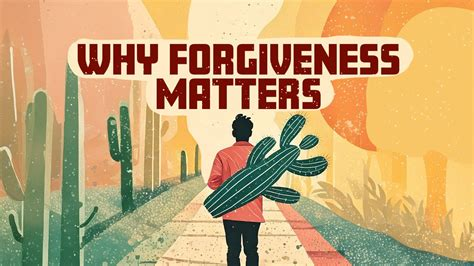
Because, again, without it, none of us could have a relationship with God!
“If You, O LORD, should mark iniquities, O LORD, who could stand? But with You there is forgiveness, that You may be feared.” Psalm 130:3–4
And I would just like to add to "that You may be feared..."
"That You may be absolutely loved, adored, and cherished forever -
("hallowed be Thy name!)." 😉
So, forgiveness is not a side issue in the Christian life—it is front and center.

And...what we receive from God vertically is meant to flow outward to others horizontally.
“Be kind to one another, tenderhearted, forgiving one another, as God in Christ forgave you.” Ephesians 4:32

If we truly understand what has been given to us, it will shape how we respond to others.
Why Is Our Ability to Forgive Rooted in God?
Because true forgiveness is not natural—it is supernatural.
Left to ourselves, we keep score. We replay offenses. We justify resentment. We hold onto what was done to us.
But through His forgiveness of us, God made a way for something entirely different.

“In Him we have redemption through His blood, the forgiveness of our trespasses, according to the riches of His grace.” Ephesians 1:7
We are not generating forgiveness—we are participating in something God Himself has already established at incomprehensible personal cost.
“We love because He first loved us.” 1 John 4:19
And we forgive because we have first been forgiven. Even our ability to forgive others comes directly from God!
Q: What Did It Cost God to Forgive Us? A: Everything!

Forgiveness is never free—it is always paid for by someone. When a debt is forgiven, the cost does not disappear; it is absorbed.
God did not overlook sin. He dealt with it fully.
“Without the shedding of blood there is no forgiveness of sins.” Hebrews 9:22
“He Himself bore our sins in His body on the tree, that we might die to sin and live to righteousness.” 1 Peter 2:24
Those who accept God's wrathful judgment of sin poured out on Jesus Christ as He died on the cross have their sins - all of them, past, present, and future - paid for - completely forgiven. The Lord essentially takes our promissory note, tears it up, and throws it away.
The Flip Side

However, those who do not accept this divinely- designed-and-executed debt forgiveness will still have debt to pay to God once their time on earth is done.
“It is a fearful thing to fall into the hands of the living God.” Hebrews 10:31
This is why we "warn every man and teach every man..." Colossians 1:28
Q: What was the cost of Forgiveness?
A: The cross of Jesus Christ was the cost of forgiveness.
And, I might happily add that it was done one time for all time. Jesus said it Himself this way while He was on the cross:
"It is finished."
While it is possible that people might extend a form of forgiveness to one another on a human level, eternal forgiveness—reconciliation with God—required the sacrifice of Jesus Christ. There is no eternal life without that forgiveness.
Is God’s Forgiveness of Us Dependent on Our Forgiveness of Others?

Let's admit it - Jesus’ words here are direct and sobering.
“For if you forgive others their trespasses, your heavenly Father will also forgive you, but if you do not forgive others their trespasses, neither will your Father forgive your trespasses.” Matthew 6:14–15
However, this is not teaching that we earn forgiveness. Scripture is clear that forgiveness is a gift of grace. What this reveals is the condition of the heart. A forgiven person becomes a forgiving person. If I am unwilling to forgive, it is not that I have lost my salvation—it is that I am out of step with it. I am resisting the very grace I claim to have received.
This is why Jesus spoke in terms of fruit:

“You will recognize them by their fruits.” Matthew 7:16
Forgiving others is not the cause of our salvation—it is one of its clearest results. If someone claims to have received the mercy of God but consistently refuses to extend mercy to others, something is out of alignment. Not because God has withdrawn His grace, but most likely because that grace has not been fully received.
The Parable of the Unforgiving Servant

Jesus once told a parable about a servant who owed his master an enormous debt—so large that there was no possible way he could ever repay it. When the time came to settle accounts, the servant fell on his knees and pleaded for mercy, begging for patience and promising to repay what he owed.
Moved with compassion, the master did something astonishing: he canceled the entire debt and let the servant go free.
But that same servant then went out and found a fellow servant who owed him a much smaller amount. Instead of extending the same mercy he had just received, he grabbed him, demanded immediate payment, and when it wasn’t forthcoming, had him thrown into prison.
When the master heard what had happened, he called the servant back in.
“You wicked servant,” he said. “I forgave you all that debt
because you pleaded with me.
Should you not also have had mercy on your fellow servant,
as I had mercy on you?”
And in his anger, the master handed him over to the jailers.
Jesus ended the parable with the above sober warning: this is what it looks like when someone receives mercy but refuses to give it.
But What if I am Struggling With Forgiving Someone?

At the same time, we must recognize that a believer may genuinely struggle to forgive. There may be deep wounds, repeated offenses, or situations that take time, prayer, and the work of the Holy Spirit to process. Choosing to forgive does not always mean the emotions immediately follow.
God is patient in that process.
“The LORD is merciful and gracious, slow to anger and abounding in steadfast love.” Psalm 103:8
The issue is not whether forgiveness happens instantly and effortlessly. The issue is the posture of the heart.
Am I willing to forgive?
Am I bringing this before the Lord?
Am I asking Him to help me release what I cannot release on my own?
That is very different from clinging to unforgiveness, justifying it, and refusing to let it go. Jesus’ warning is not aimed at the struggling believer—it is aimed at the hardened heart. And it brings us back to the core truth:
“Then his master summoned him and said to him, ‘You wicked servant! I forgave you all that debt because you pleaded with me. And should not you have had mercy on your fellow servant, as I had mercy on you?’” Matthew 18:32–33
The more deeply we understand how much we have been forgiven, the more naturally forgiveness begins to flow from us to others. In some especially difficult situations, perhaps not easily, or instantly, but truly.

Q: One-Time Forgiveness or Ongoing Forgiveness?
A: Both!
Positionally, we are fully forgiven in Christ:
“There is therefore now no condemnation for those who are in Christ Jesus.” Romans 8:1
But relationally, we continue to walk through a fallen world, and our fellowship with God is affected by sin.
“If we confess our sins, he is faithful and just to forgive us our sins and to cleanse us from all unrighteousness.” 1 John 1:9
Jesus illustrated this in a simple way:
“The one who has bathed does not need to wash, except for his feet, but is completely clean.” John 13:10
We are clean—but our feet still get dusty. Daily forgiveness is not about being saved again. It is about staying in close fellowship.
And part of that ongoing posture is this: we cannot cling to unforgiveness and expect to walk freely in God’s forgiveness.

Q: How Often Must We Forgive?
A: Every time!
Peter once asked the question many of us have likely wondered:
“Then Peter came up and said to him, ‘Lord, how often will my brother sin against me, and I forgive him? As many as seven times?’ Jesus said to him, ‘I do not say to you seven times, but seventy-seven times.’” Matthew 18:21–22
Some translations say “seventy times seven.” Either way, the point is not a number—it is the removal of any limit at all. This reflects the heart of God towards us:
“He does not deal with us according to our sins, nor repay us according to our iniquities.” Psalm 103:10
“As far as the east is from the west, so far does He remove our transgressions from us.” Psalm 103:12
We never reach a point where God says,
“That's IT; I've had it! I'm so done!"
This is especially important for those who struggle with the same sin over and over again. It is very easy to begin to feel that God must be growing weary of us… that surely His patience has limits… that we have asked forgiveness one too many times. But we have it on good authority from the Bible:
“If we confess our sins, He is faithful and just to forgive us our sins and to cleanse us from all unrighteousness.” 1 John 1:9
God forgives us not because of us, per se, but because of His own faithful nature. This does not make sin insignificant—but it does mean that God’s mercy outlasts the repetition of those sins that seem to be particularly stubborn.

As we come to understand that we can't outspend God's forgiveness, it begins to change how we deal with others.
“Then his master summoned him and said to him, ‘You wicked servant! I forgave you all that debt because you pleaded with me. And should not you have had mercy on your fellow servant, as I had mercy on you?’” Matthew 18:32–33
The more deeply we understand how often we are forgiven, the more freely we forgive.

Secretly harboring unforgiveness towards someone might seem like something we can ignore, because not forgiving someone is a sin of "omission," if you will. It's something we simply don't do, rather than something we do do. But unforgiveness is not neutral—it is destructive.
“Let all bitterness and wrath and anger and clamor and slander be put away from you, along with all malice.” Ephesians 4:31
Bitterness does not stay contained. It spreads into other areas of life, and it even spreads to other people.
“See to it that no root of bitterness springs up and causes trouble, and by it many become defiled.” Hebrews 12:15
Unforgiveness keeps us tied to the offense. It keeps the wound active.
Again, Jesus’ parable makes this soberingly clear:
“And in anger his master delivered him to the jailers, until he should pay all his debt. So also my heavenly Father will do to every one of you, if you do not forgive your brother from your heart.” Matthew 18:34–35
The unforgiving servant ends up imprisoned—not because forgiveness was unavailable, but because he refused to extend it.
The Freedom of Forgiveness

Forgiveness doesn't say,
“That was okay.”
It says,
“I release my right to hold this over you.”
It is obedience—but it is also freedom.
“A tranquil heart gives life to the flesh, but envy makes the bones rot.” Proverbs 14:30
“Good sense makes one slow to anger, and it is his glory to overlook an offense.” Proverbs 19:11
“Whoever is slow to anger is better than the mighty, and he who rules his spirit than he who takes a city.” Proverbs 16:32
“Keep your heart with all diligence, for from it flow the springs of life.” Proverbs 4:23

Often, the one most set free by forgiveness is the one doing the forgiving.
Living This Prayer - When we pray...

...we are not making a casual request.
We are aligning ourselves with the very heart of God.
We are acknowledging, daily:
"I need forgiveness. And I must extend what I have received."
This is where our relationship with God and our relationships with others meet.
“By this all people will know that you are my disciples, if you have love for one another.” John 13:35
And forgiveness is one of the clearest expressions of that love.
Interested in knowing how to enter into a personal relationship with God through faith in the death and resurrection of Jesus Christ? Say a Salvation Prayer and Receive Jesus Christ Today.
Of course, the saying of a prayer is the reflection of a monumental and life-changing heart decision, but this is a good guide.




Comments